We are offering for sale in Mazara del Vallo: A HISTORIC BAGLIO that, with all its beauty and history, has stood since 1881 as one of the most beautiful, traditional, and charming locations in the area. Amid the rustling of olive leaves and the scents of the citrus grove, in a cool setting just 3 km from the sea and the historic center. Located in C/da S. Maria, it was completely renovated in 2014 with high-quality finishes and consists of:
1. Covered living area of 839 m², divided into
- Main building of 532 m² over 2 stories (see floor plans 1 and 2),
- Warehouse of 156 m²
- Outbuildings of 152 m²
2. Outdoor area (courtyard, veranda, and pool) of 514 m²
3. Land surrounding the property with an olive grove and citrus grove totaling 3,197 m²
The Baglio is divided internally into fully independent apartments and a studio apartment: 11 bedrooms, 6 bathrooms, 3 kitchens, 2 living rooms, a tower with two habitable lofts, and two additional large rooms on the side lot currently used as a laundry room. Private garden with barbecue, terrace overlooking the sea, swimming pool with citrus grove, sun deck, olive grove, laundry area, 2,000 square meters of open space, and reserved parking in a fenced-in area.
The city of Mazara del Vallo is renowned for its seafaring tradition (City of Fish), the beauty of its sea and beaches, and its countryside, with vast olive groves and vineyards, which is ideal for walking and biking and is surrounded by an atmosphere of peace and serenity, allowing you to enjoy your vacation to the fullest.
Just 3 km from the sea and the historic center, and 1 km from the nearest supermarket. Easily accessible, 2 km from the A29 highway exit (Palermo-Mazara).
The typical layout of a baglio features an inward-facing structure—that is, closed off from the outside, with all openings facing inward toward the courtyard. The perimeter walls, devoid of openings, served as protection against intruders and malefactors, while also providing a potential defense against enemy assaults. A large entrance gate allowed even carriages and transport wagons to access the large courtyard. Generally, the residential portion of the building had one or more upper floors where the “master” and his family lived. The lower floors were reserved for the peasants and for storing provisions. The stables were also located within the courtyard. Other rooms served as storage for farm tools and as a shelter for the landlord’s carriages. The baglio is an expression of a geo-economic organization linked to the feudal system or large estates, and thus to the vast landholdings that sustained the incomes of the aristocratic and bourgeois classes. The baglio was a large farmstead inhabited not only by the landowners themselves but also by the farmers who worked there year-round or seasonally. It therefore featured numerous living quarters, as well as stables and storage areas for the harvest. Even today in Sicily, in areas traditionally used for agriculture, it is possible to encounter such structures of considerable size and extent—mostly abandoned but sometimes restored and repurposed as agritourism farms. The bagli are almost always located near water sources and in commanding positions, from which it is easy to survey the surrounding territory, and their exterior resembles that of fortified structures, with few small exterior wooden windows fitted with iron grilles. The roofs generally feature a wooden load-bearing structure, with “scissor” trusses, beams, battens, terracotta bricks, and tiles, or a wooden framework with tiles alone.

 Italiano
  Français
  Español
  Deutsch
  Português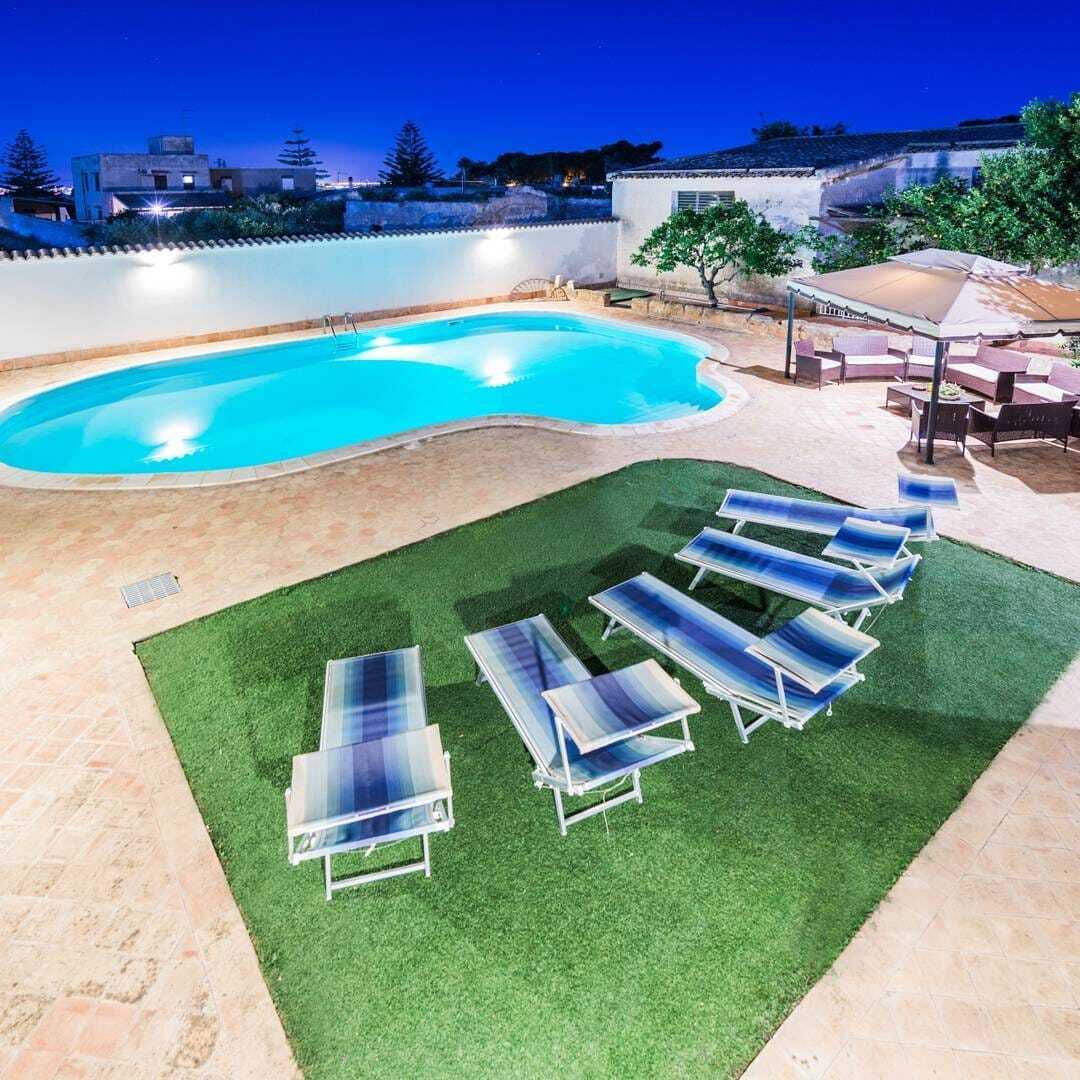


 Teaser


 Mazara del Vallo - Sicilia
 Number of rooms: 12
  Bathrooms: 6
  Internal ref.:
22841095-162
Internal ref.:
22841095-162  Sqm:
840
Sqm:
840  Energy class:
E
Energy class:
E  Heating system:
Autonomous
Heating system:
Autonomous 


